If you’ve ever wondered why some coffees command a premium price and a devoted following, Jamaican Blue Mountain is usually somewhere near the top of that conversation. But what actually makes it different? And why does it matter where your beans come from, and who grew them?
At Blue Palm Coffee, we work directly with farmers on the slopes of the Blue Mountains in Jamaica — and we think that story is worth telling from the very beginning.
First, What Is Jamaican Blue Mountain Coffee?
Jamaican Blue Mountain Coffee is a certified designation, not just a name. To carry the label, beans must be grown in a defined geographical region — the Blue Mountain range in eastern Jamaica, at elevations typically between 3,000 and 5,500 feet above sea level. The region is tightly regulated by the Coffee Industry Board of Jamaica, which oversees everything from cultivation standards to export certification.
It’s one of the most protected and scrutinised coffee designations in the world, which means when you buy genuine Blue Mountain beans, you know exactly where they came from and how they were produced.
The Growing Conditions Are Unlike Anywhere Else
Coffee is deeply shaped by the environment it grows in — the altitude, soil, rainfall, and temperature all leave their mark on the final cup. The Blue Mountains offer a rare combination that’s difficult to replicate elsewhere.
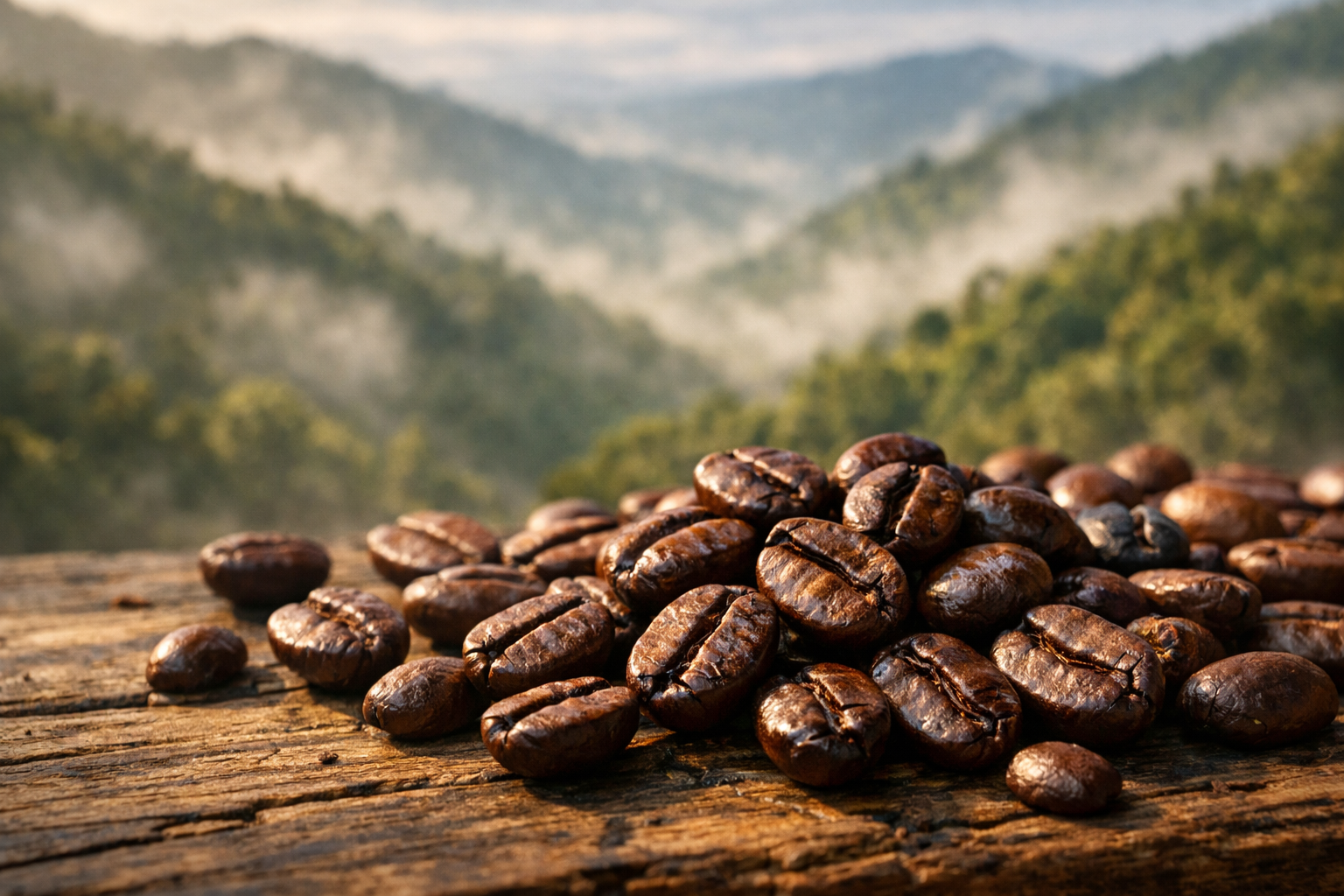
The high altitude slows the maturation of the coffee cherry, giving the bean more time to develop its sugars and complex flavour compounds. The volcanic soil is rich in minerals and exceptionally well-draining, preventing waterlogging while retaining the nutrients that feed the plant. The near-constant mist that rolls through the mountains provides natural shade and regulates temperature, reducing stress on the plants and producing a denser, more flavourful bean.
This is why Blue Mountain coffee has earned its reputation for a clean, smooth, well-balanced cup — low in bitterness, mild in acidity, and with a depth of flavour that reveals itself slowly rather than hitting you all at once.
How Is It Different to Supermarket Coffee?
Most coffee you’ll find on supermarket shelves is a blend — often a mix of Robusta and lower-grade Arabica beans sourced from multiple countries and roasted to a uniform standard. Blending has its place, but it’s primarily a commercial process designed for consistency and cost efficiency at scale.
Jamaican Blue Mountain is 100% single-origin Arabica. There’s no blending, no masking of inferior beans with a heavier roast, and no artificial flavouring. What’s in the bag is what grew on a specific hillside in Jamaica — nothing more, nothing less.
The difference in the cup is noticeable. Where commodity coffee can be sharp, bitter, or one-dimensional, genuine Blue Mountain tends to be mellow, sweet, and layered. Many people who find regular coffee too harsh discover they can drink Blue Mountain without milk or sugar for the first time.
Why Buying Direct from the Farm Matters
This is where Blue Palm Coffee does things differently.
A lot of coffee — even good coffee — passes through a chain of intermediaries before it reaches you: exporters, importers, distributors, retailers. Each step adds cost and removes accountability. By the time you open the bag, the connection to the person who grew the beans is long gone.
We buy directly from farmers on the slopes of the Blue Mountains. That means a fairer return for the people doing the hardest work, full traceability from farm to cup, and fresher beans that haven’t been sitting in a warehouse chain for months.
It also means we can tell you exactly where your coffee came from — which farm, which elevation, which farmer. That kind of transparency is rare, and we think it matters.
A Word on Freshness and Roasting
Even the best beans in the world can be let down by poor handling or stale roasting. Jamaican Blue Mountain is typically roasted to a medium level to preserve the bean’s natural complexity — a darker roast would overpower the very characteristics that make it special.
Freshness matters enormously with single-origin speciality coffee. The volatile compounds that give Blue Mountain its distinctive aroma and flavour begin to degrade after roasting, which is why sourcing from someone close to the supply chain — rather than pulling a bag off a shelf that’s been sitting there for months — makes a tangible difference to what ends up in your cup.
Ready to Try It for Yourself?
The best way to understand what makes Jamaican Blue Mountain coffee different is to taste it. We think once you do, you’ll find it difficult to go back.
Browse our range of Jamaican Blue Mountain coffees in the Blue Palm shop — sourced directly from farmers in the Blue Mountains and roasted to bring out everything that makes this coffee genuinely exceptional.